
Butter, garlic and wine that ages twenty years
Piedmontese cooking is the least Mediterranean in Italy, and makes no apology for it.
In Piedmont they cook with butter rather than oil, eat egg pasta rather than durum wheat, and the list of starters alone fills a dinner. It is the cooking of a cold region, of plain and mountain, which had a court for centuries and which took more from France than it admits.
The dish that divides
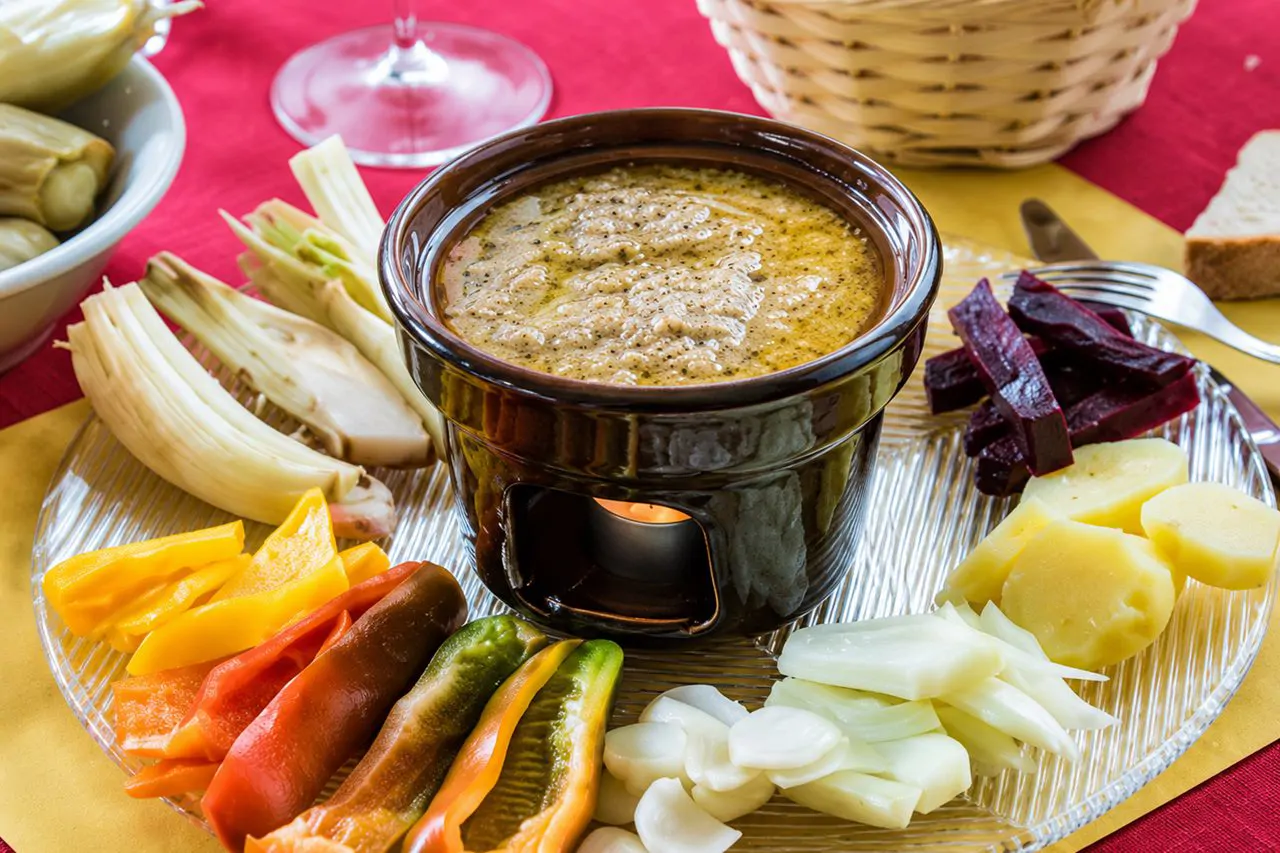
Bagna caoda is made with garlic, anchovies and oil, cooked slowly until they turn to a cream, and kept hot in the middle of the table while everyone dips raw vegetables into it. It is eaten in winter, in company, and whoever makes it argues about how much garlic goes in. The anchovies came up from Liguria along the salt roads, which is why a region with no sea is full of preserved fish.
The pasta and the meat
Agnolotti del plin are small, closed with a pinch, and can be eaten with no sauce at all, off a napkin. Tajarin are very fine tagliatelle with a great many egg yolks. Vitello tonnato and bollito misto belong to the feast-day table, and the brasato is braised in Barolo. Fritto misto alla piemontese can run to fifteen pieces, sweet ones included.
The truffle and the hazelnut
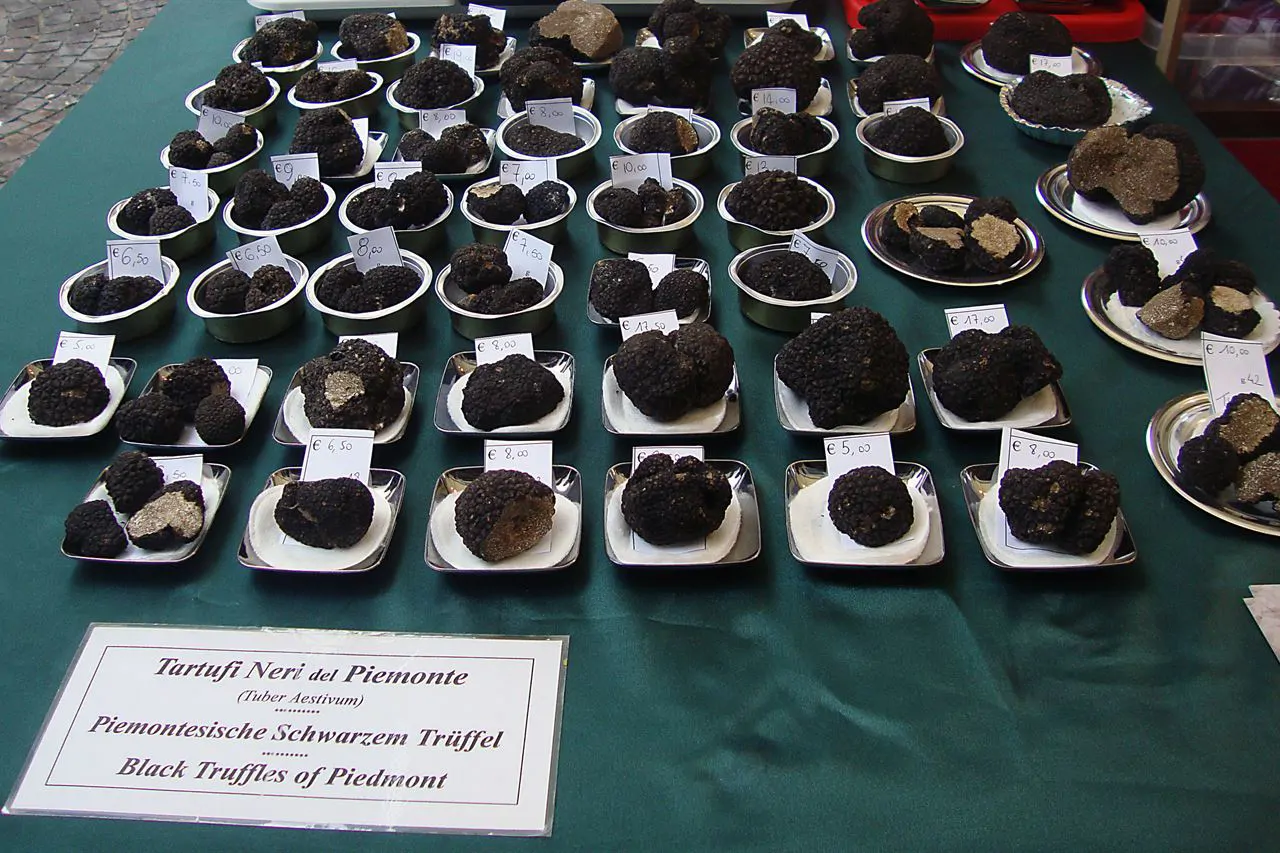
The white truffle of Alba is gathered from October to January and grated raw over an egg or over tajarin: it costs a great deal and is worth it only if it is genuine. The hazelnut of the Langhe is the area's other wealth, and from it come the hazelnut cake, the gianduiotto and half the Italian confectionery industry.
It is no accident that Slow Food started here: the association began at Bra, near Cuneo, in 1986, and has since set up the Salone del Gusto in Turin and a university of gastronomic sciences at Pollenzo. Travelling in this region you notice it in the number of small producers who receive by appointment, and in the markets, which are still real ones.
What to drink
Nebbiolo gives Barolo and Barbaresco, wines that age ten or twenty years, and further north Gattinara and Ghemme. Barbera is the everyday wine of the Asti hills, dolcetto the one to drink young in the Langhe. Among the whites there are Gavi, Arneis from the Roero and Erbaluce; and then Moscato d'Asti, sweet and light, which goes very well with the hazelnut desserts.